


From Reactive to Prepared: From Reactive Mode to Prepared for Pressure
September 2026
Being prepared means knowing how your business will respond before disruption puts your people, clients, and operations under pressure. A clear, tested approach helps you identify potential gaps early, reduce avoidable downtime, and make sure the right people know what to do when something goes wrong. Instead of being blindsided and figuring things out in the middle of a crisis, you can respond with confidence, keep the business moving, and know you’ve taken the right steps to protect what you’ve built.
Insight Resources
Articles
1. 6 Elements of an Incident Response Plan That Help Your Business Recover Faster
2. 6 Business Disruptions That Can Derail Operations and How to Prepare for Them
3. 5 Warning Signs Your Business Is Not as Prepared for Disruption as You Think
4. 5 Recovery Planning Mistakes That Can Turn a Disruption Into a Bigger Business Problem

Checklist
Insight Tips

Don’t Wait for a Cyberthreat to Become a Business Problem
The best time to deal with a cyberthreat is before your employees, clients, or operations ever feel the impact. 🛡️
Too often, cybersecurity becomes a priority only after an account is compromised, data is exposed, or systems become unavailable.
A prepared approach works differently.
It looks for suspicious activity early, puts the right safeguards in place, and makes sure someone is responsible for responding when something doesn’t look right.
That helps turn cybersecurity from something leadership worries about into something they know is being handled. 🔎
Want a clearer picture of where your business may be exposed? Schedule a discovery call.

Good IT Support Solves Problems Before You See Them
Some of the most valuable IT work happens without your team ever noticing it. ⚙️
Systems stay available. Backups complete successfully. Security alerts get reviewed. Updates happen when they should. Small problems get addressed before they interrupt someone’s work.
That kind of stability doesn’t happen by accident.
It comes from having someone actively paying attention to your technology and taking responsibility for keeping it working.
Your employees shouldn’t have to discover problems before your IT provider does. And leadership shouldn’t have to wonder whether anyone is watching. 👀
If you’re not sure what’s actually being handled behind the scenes, schedule a discovery call.

Recovery Confidence Comes From Testing, Not Hoping
There’s a big difference between hoping your business can recover and knowing it can. 🎯
You may have backups. You may have a recovery plan. You may even know who you’re supposed to call.
But have those things actually been tested?
Real confidence comes from knowing your critical systems can be restored, your team understands its responsibilities, and the right people are prepared to respond when something goes wrong.
You don’t need to understand every technical detail. You need confidence that the people responsible for IT have prepared for the details that matter. ✅
Want to know how prepared your business really is? Schedule a discovery call.

The Best Protection Starts Before Something Goes Wrong
Good IT protection shouldn’t wait for a crisis to prove its value. ☂️
It should be working every day to reduce the chances that a technology problem, cyber incident, or failed backup becomes a major business disruption.
That means monitoring systems, maintaining security controls, checking backups, managing access, and identifying issues before your employees or clients experience the consequences.
You may never see most of that work happening.
That’s the point. 🔍
Your job is to run the business. Someone else should be making sure the protection is there when you need it.
Want to review how prepared your business is? Schedule a discovery call.

A Clear Recovery Plan Keeps Confusion From Taking Over
When technology fails, the last thing your team needs is a debate about what happens next. 🚦
Businesses that are better prepared for disruption usually have a few things figured out ahead of time:
A documented recovery plan
Clearly assigned responsibilities
Backups that have actually been tested
Defined communication procedures
Recovery steps employees understand
Preparation doesn’t guarantee that nothing will ever go wrong.
It makes sure your team isn’t starting from zero when it does. 📋
If you’re not confident everyone knows what happens next during a disruption, schedule a discovery call.

Having a Backup Isn’t the Same as Being Able to Recover
A successful backup notification can provide reassurance. But the real question is whether that backup can get your business running again. 💾
When critical files disappear, hardware fails, or ransomware locks access to your systems, your employees and clients need more than a backup that exists somewhere.
They need the business operational again.
That’s why backups should be monitored, protected, and tested to confirm that critical data and systems can actually be restored when needed. 🔄
The middle of a disruption is the wrong time to discover a problem with your recovery strategy.
Want to know how confident you should be in yours? Schedule a discovery call.
When Something Goes Wrong, Who Owns the Next Step?
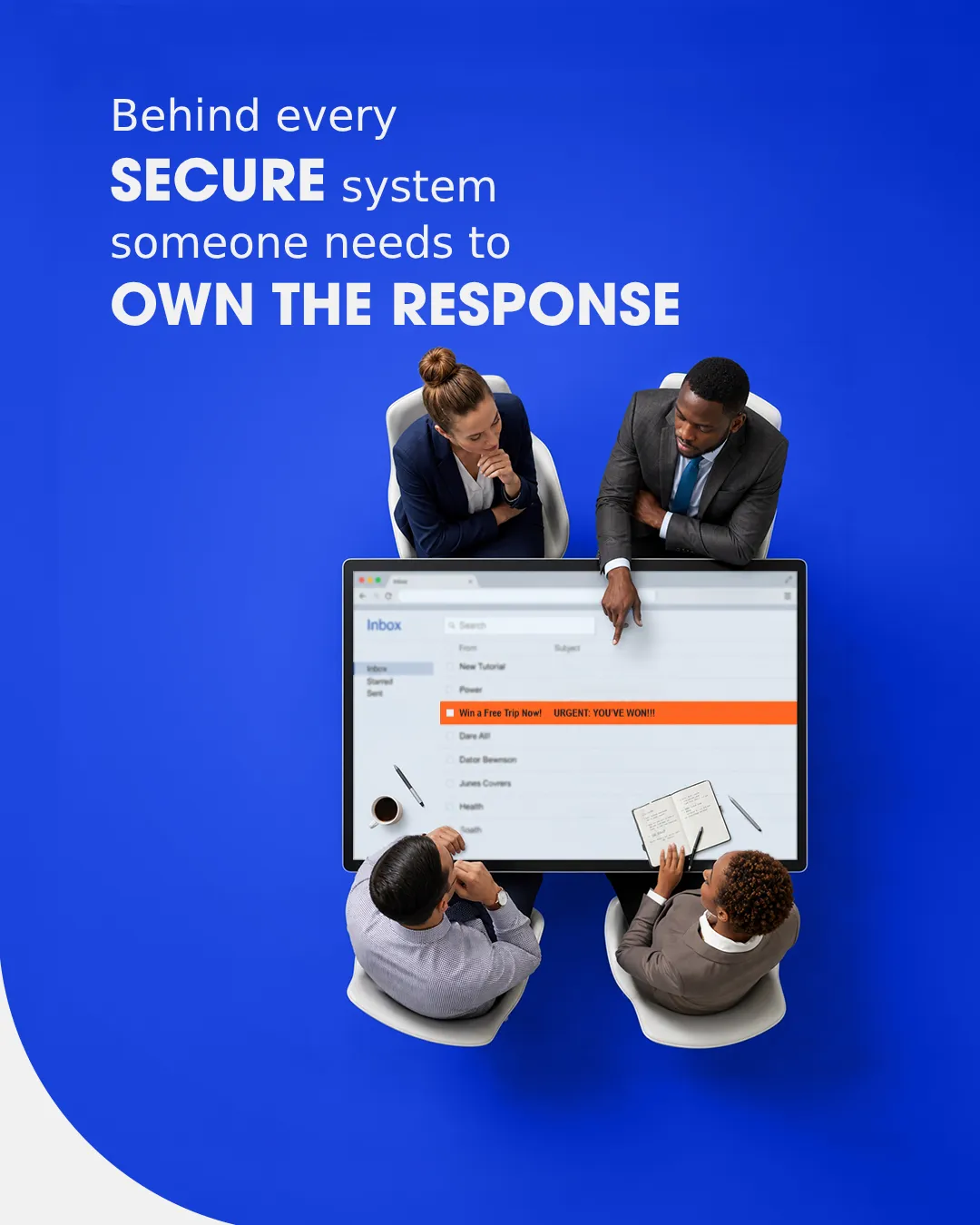
Cybersecurity tools matter. But someone still needs to know what happens when those tools detect a problem. 🛡️
A suspicious login appears.
An employee reports a questionable email.
A security alert fires.
Who reviews it? Who decides whether it needs to be escalated? Who communicates with leadership if the business may be affected?
Those decisions shouldn’t be invented in the middle of an incident.
Strong cybersecurity brings technology, people, and clear responsibilities together so your team knows when to act and who owns the next step. 👥
Reach out if you’d like to talk about how prepared your business is to respond.

Make the Hard Decisions Before the Crisis
Even a great team can struggle when they’re forced to improvise under pressure. 🧭
An outage, cyberattack, hardware failure, or other disruption can suddenly create dozens of questions:
What happened?
What do we restore first?
Who needs to know?
How will employees work?
What should we tell clients?
The more of those decisions you make ahead of time, the fewer your team has to make while the clock is ticking.
Preparation gives people direction when circumstances don’t. ✅
Have you seen good preparation turn a difficult situation into a manageable one?

our Team Shouldn’t Have to Invent the Plan Under Pressure
When critical technology stops working, pressure builds quickly. ⏱️
Employees can’t work normally. Clients or patients may be waiting. Leadership wants answers. Everyone needs to know what happens next.
That’s a difficult time to start building the plan.
A tested recovery process gives your team defined priorities, clear ownership, current contact information, and specific next steps before the situation becomes urgent.
The goal isn’t to eliminate every disruption. It’s to keep a disruption from turning into unnecessary confusion. 🧭
If you’re not sure your current plan would give your team that clarity, schedule a discovery call.
What Will You Wish You Had Done Before the Outage?
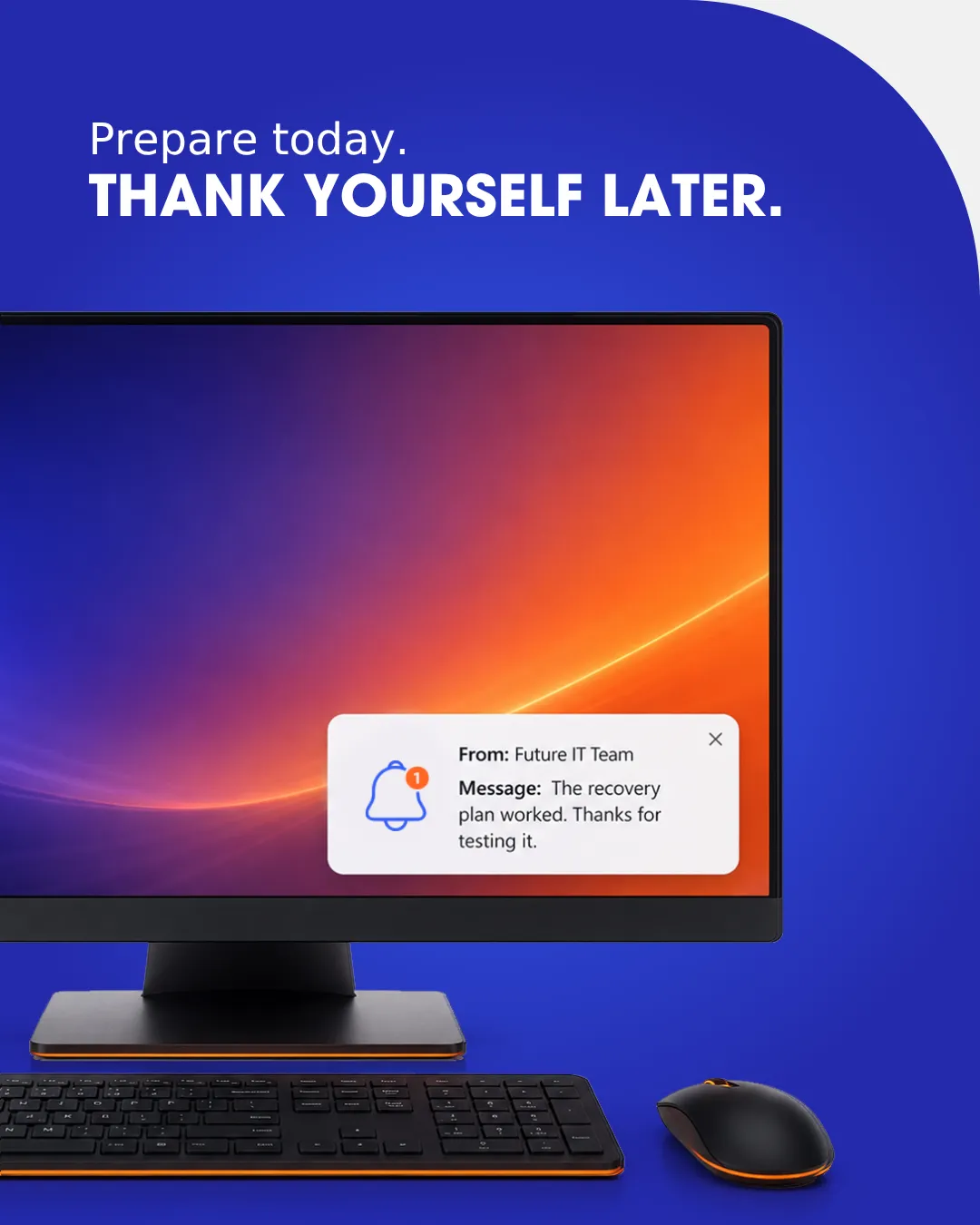
If a critical system failed tomorrow, what would you wish your business had done today? 🤔
Tested the backups?
Updated the recovery plan?
Documented critical systems?
Clarified who is responsible for what?
These tasks are easy to postpone because there’s always something more immediate competing for attention.
Until something goes wrong and they suddenly become the most important items on the list.
Prepared businesses make time for them before that happens. 📅
Reach out if there’s a preparedness task your business needs to stop putting off.

Questions Your Incident Response Plan Should Already Answer
When a cyber incident happens, your team shouldn’t be figuring out the basics while the business is already under pressure. 🚨
A useful incident response plan should answer six important questions ahead of time:
Who is responsible for what?
Who needs to be contacted?
How will employees and leadership communicate?
Which systems and operations take priority?
What steps will guide the response and recovery?
When will the plan be tested and reviewed?
The goal is simple: give your team direction when circumstances are anything but normal. 📋
Learn what a practical incident response plan should include in our latest Article.
Want help determining whether your current plan is ready? Schedule a discovery call.

Are You Preparing for the Disruptions Most Likely to Affect Your Business?
You can’t predict every disruption. But you can prepare for the kinds of events most likely to interrupt your business. ⚠️
That could include:
Cyberattacks and ransomware
Hardware or software failures
Human error
Internet or cloud service outages
Severe weather and natural disasters
A key employee suddenly becoming unavailable
The important question isn’t whether you know exactly what will happen.
It’s whether your people, technology, and recovery plans are prepared to keep the business moving when something does. 🧭
Learn about six common disruptions businesses should be ready for in our latest Article.
If you’d like help evaluating your own preparedness, schedule a discovery call.

5 Signs Your Business Is Still Stuck in Reactive Mode
Being reactive doesn’t always look like chaos.
Sometimes it looks like everything working normally until one problem sets everything else in motion. ⚙️
Here are five signs your business may still be reacting instead of preparing:
Recovery gets discussed only after something breaks
Employees aren’t sure what to do during an outage
Your recovery plan hasn’t been reviewed recently
Everyone assumes the backups work, but nobody has tested them
Every significant IT problem becomes a fire drill
The common thread? Leadership doesn’t have enough confidence about what will happen when something goes wrong. 🔎
Learn how to recognize the difference between reactive and prepared in our latest Article.
Ready to get out of reactive mode? Schedule a discovery call.
The Recovery Gaps You Don’t Want to Discover During an Outage
Some recovery mistakes stay invisible right up until you need the plan to work. ⚠️
An untested backup.
An outdated recovery plan.
Unclear responsibilities.
Missing documentation.
No agreement about which systems or operations should be restored first.
Individually, these may be easy to overlook. During a real disruption, they can mean more downtime, more confusion, and more pressure on employees and leadership.
A prepared business identifies those gaps before the clock is ticking. 🔍
Learn about common recovery mistakes and what to address before they become a problem in our latest Article.
Want another set of eyes on your recovery readiness? Schedule a discovery call.
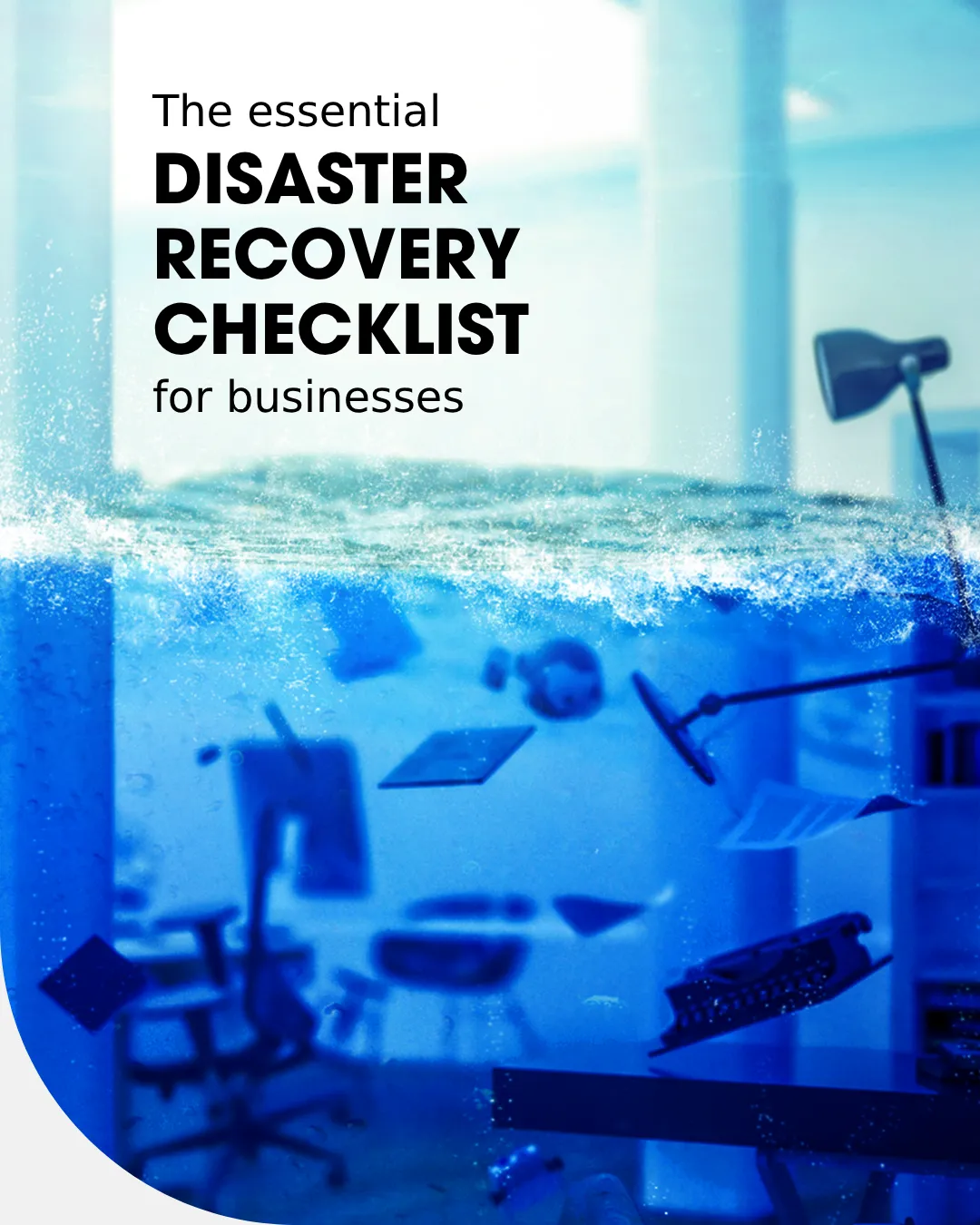
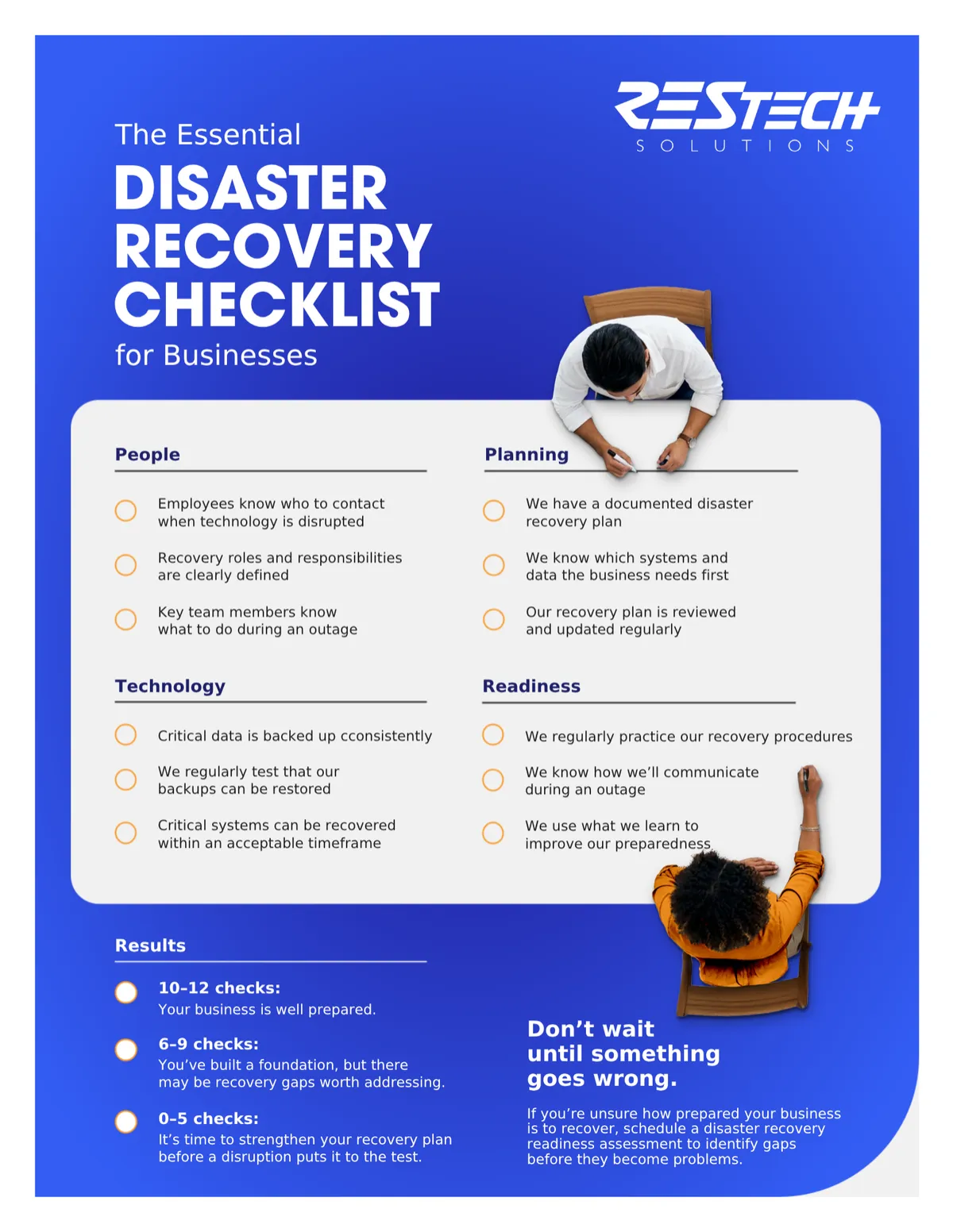
How Prepared Is Your Business to Recover From a Disruption?
It’s easy to assume you’re prepared when everything is working normally. The harder question is whether your plans will hold up when something isn’t. 📋
That means looking beyond whether you simply have backups or a recovery document somewhere.
Do the right people know their responsibilities?
Have critical systems and priorities been identified?
Are recovery procedures current?
Have they actually been tested?
Our Essential Disaster Recovery Checklist for Businesses can help you take a structured look at your preparedness and identify potential gaps before a real disruption exposes them. 🔎
When Something Goes Wrong, Your Team Needs a Plan
A manageable disruption can become a much bigger business problem when nobody knows what happens next. 🚨
Who takes the lead?
What gets addressed first?
Who communicates with employees and clients?
Who is responsible for coordinating the response?
Those decisions are much easier to make before systems are down and people are waiting for answers.
A clear plan gives your team direction when pressure is high and helps keep leadership from getting pulled into decisions that should already have an owner. 🧭
Want to know whether your business is prepared to respond? Schedule a discovery call.
Fast Recovery Starts Long Before the Disruption
When a business recovers smoothly from an outage or cyber incident, it can look almost effortless from the outside. ⚡
It usually isn’t.
Behind that recovery are decisions that were made earlier: what needs to be restored first, who owns each responsibility, how employees will communicate, and what steps everyone should follow.
The middle of a disruption is no time to discover that the plan exists only on paper or that nobody has tested it.
Preparation is what makes a confident response possible. ✅
Want to know whether your recovery plan is ready to perform under pressure? Schedule a discovery call.
Prepared Businesses Don’t Have to Start From Zero
The businesses that respond well under pressure aren’t necessarily better at making decisions on the fly.
They’ve already made many of the important decisions. 🧭
They know who takes the lead.
They know which systems and operations matter most.
They know who needs to be contacted.
And they have a process for getting the business moving again.
That’s the difference between reacting to whatever happens next and responding with a plan. 📋
If you’re not sure your business has that level of clarity, schedule a discovery call.
A Recovery Plan Is Only Useful If Your Team Can Act on It
A recovery plan sitting in a document isn’t enough. 📄
When something goes wrong, the people responsible for responding need to know:
Who takes the lead?
Who communicates with employees, clients, or vendors?
Who coordinates with IT?
What gets addressed first?
And where do they find the information they need?
Clear ownership turns a recovery plan from documentation into action. 👥
Leadership shouldn’t have to sort out those responsibilities while employees are waiting and the business is under pressure.
Reach out if you’d like us to review your recovery readiness.
Prepared Businesses Don’t Wait for the Warning
Not every disruption gives you time to prepare after you see it coming. ⚠️
A cyber incident can begin quietly. Hardware can fail without much warning. An outage can suddenly leave employees unable to work or clients unable to get what they need.
By the time the problem is obvious, the decisions that matter most may already need to be made.
That’s why preparation happens beforehand.
Know what matters most. Know who owns the response. Know how you’ll communicate. Know how you’ll recover. And make sure someone is responsible for keeping the plan current. 🧭
The goal isn’t to predict everything that could go wrong.
It’s to know your business won’t have to start from scratch when something does.
Ready to move from reactive to prepared? Schedule a discovery call.

Navigation
About us
Get In Touch
© Copyright 2026. ResTech Solutions. All rights reserved.